
What if the chemical you’re using to “clean” your wall is actually the very thing that will permanently scar it? For many property owners, the sight of fresh vandalism triggers an immediate impulse to scrub, yet the wrong approach often leads to “ghosting” or chemical burns that are worse than the original tag. You want the paint gone, but you need to know how to remove graffiti without damage to avoid ruining the texture of your masonry or harming nearby landscaping. It’s a high-stakes situation where a single mistake can feel irreversible.
We understand that protecting your investment requires more than just brute force. This guide provides the expert-level strategies needed to eliminate vandalism while preserving your surface’s integrity. We’ll explore how to match professional solvents to specific substrates and explain why the April 2026 EPA ban on methylene chloride has shifted the industry toward safer, high-performance alternatives. From using DISAPPEAR ORGANIC GRAFFITI & ADHESIVE REMOVER™ to implementing the ND GRAFFITI SHIELD SYSTEM™, you’ll gain a clear path to a clean, protected property.
Key Takeaways
- Understand why substrate porosity is the primary factor in preventing permanent “ghosting” shadows on your property.
- Discover how to remove graffiti without damage by using chemical dissolution strategies that prioritize surface integrity over aggressive scrubbing.
- Follow a professional three-phase protocol that emphasizes the importance of inconspicuous testing and precise dwell times.
- Identify surface-specific techniques for brick, stone, and metal to ensure complete pigment removal without causing oxidation or texture loss.
- Learn why permanent protective coatings offer a more cost-effective and durable solution than repeatedly painting over vandalism.
The Risk of Damage: Understanding Substrates and Chemical Reactions
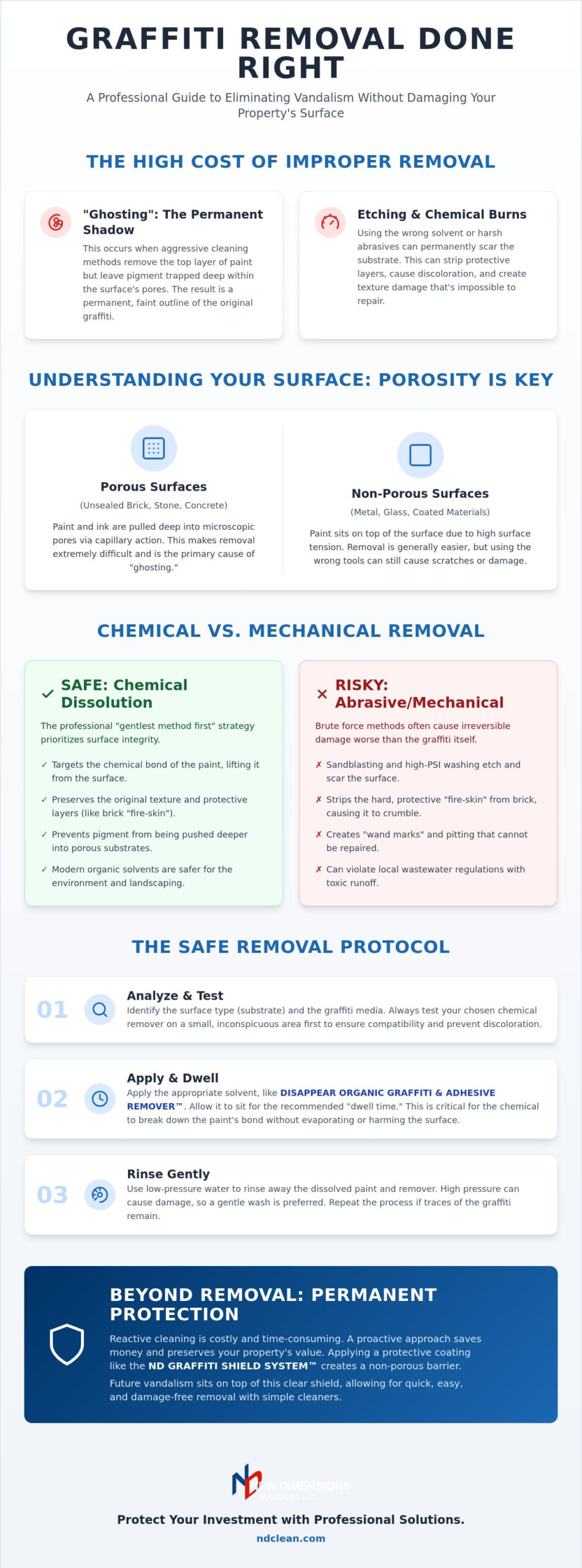
Effective restoration begins with a fundamental understanding of the substrate, which is the technical term for the underlying surface material. Whether you are dealing with historic limestone or modern aluminum, the porosity of that material is the primary factor in determining success. Porosity refers to the microscopic voids and channels within a surface. When vandals apply paint, these pores act like tiny reservoirs. If you don’t understand how to remove graffiti without damage, your first instinct might be to reach for a wire brush or high-pressure water. However, aggressive mechanical force often results in “ghosting,” a permanent shadow where pigment remains trapped deep within the surface grain long after the top layer is gone.
The stakes are high when selecting graffiti removal techniques for sensitive areas. For instance, high-pressure washing can easily exceed the structural threshold of soft masonry or aged wood, leading to pitting, erosion, and “wand marks” that are impossible to repair. Additionally, the industry is moving away from hazardous solvents. The U.S. Environmental Protection Agency (EPA) has banned the distribution of methylene chloride for most commercial paint removal uses, effective April 28, 2026. This regulatory shift highlights the danger these harsh chemicals pose to both the environment and the structural integrity of your building’s facade.
Porosity and Surface Tension
Materials bond with spray paint in vastly different ways. Metal and glass have high surface tension and low porosity, meaning the paint sits on the surface. Conversely, unsealed brick and stone are subject to capillary action. This physical process pulls liquid ink and thinners deep into the substrate, making extraction difficult. A protective expert approach always starts with a surface analysis. By understanding the rate of absorption, you can select a professional solution like DISAPPEAR ORGANIC GRAFFITI & ADHESIVE REMOVER™ that breaks bonds without driving pigments deeper into the stone.
The Chemistry of Vandalism
Graffiti isn’t a single substance; it’s a mix of alkyd sprays, permanent markers, and acrylics. Each media type reacts differently to heat and light. “Heat-set” graffiti occurs when sun exposure causes the paint to bake into the surface, creating a more resilient chemical bond. This complication requires a sophisticated removal strategy that accounts for the age of the tag. Without the right chemical selection, you risk a reaction that “smears” the paint instead of lifting it, complicating the goal of learning how to remove graffiti without damage. Proper preparation ensures you are treating the chemical bond rather than just the visible color.
Evaluating Chemical vs. Mechanical Removal Methods
When faced with a tagged wall, the immediate impulse is often to scrub the paint away as quickly as possible. However, successful restoration relies on a hierarchy of intervention that prioritizes the substrate’s long-term health. The goal of learning how to remove graffiti without damage is to find the precise point where the paint dissolves while the underlying surface remains untouched. This delicate balance is rarely achieved through brute force alone. Instead, professional practitioners evaluate three primary modes of action: manual scrubbing, high-pressure washing, and chemical dissolution.
Traditional solvents often present a hidden liability in the form of toxic environmental runoff. When these harsh chemicals wash into the soil, they can destroy landscaping, harm local wildlife, or lead to violations of local wastewater regulations. By adopting a “gentlest method first” strategy, you mitigate these risks and ensure the safety of both the property and the surrounding ecosystem. This methodical approach transitions from simple water-based cleaning to targeted organic solvents, only using mechanical assistance when the surface can safely tolerate the friction.
The Problem with Abrasive Cleaning
Abrasive methods like sandblasting or high-PSI pressure washing are frequently used because they offer immediate visual results. The danger is that they often “etch” the surface, creating permanent scars that are more unsightly than the original graffiti. For masonry, this is particularly catastrophic. Aggressive blasting can remove the “fire-skin,” which is the hard, protective outer layer formed during the kiln-firing process. Once this layer is breached, the soft interior of the brick is exposed to the elements, leading to rapid moisture absorption and crumbling. This is a critical consideration when removing graffiti from historic surfaces, where the materials are often irreplaceable and sensitive to friction.
Organic Removers: A Modern Solution
Modern bio-based solvents have revolutionized the industry by offering high-performance results without the toxicity of older, banned chemicals. Products such as DISAPPEAR ORGANIC GRAFFITI & ADHESIVE REMOVER™ are engineered to break the molecular bond of the paint itself rather than attacking the substrate. These water-based solutions are non-flammable and feature low VOC levels, making them safe for use in high-traffic residential areas or near sensitive landscaping. By allowing the chemistry to do the work through proper dwell time, you eliminate the need for aggressive scrubbing. This science-led approach represents the gold standard for anyone seeking how to remove graffiti without damage while maintaining a professional commitment to environmental responsibility.
Step-by-Step: The Safe Graffiti Removal Protocol
How do you ensure the cure isn’t worse than the disease? When a property is tagged, the immediate instinct is to act fast, but haste without a plan often leads to permanent surface scarring. Following a methodical, professional protocol is the only way to guarantee success. This sequence prioritizes surface health and ensures you understand how to remove graffiti without damage by treating the chemistry of the paint rather than attacking the wall itself.
- Phase 1: Identification and Testing. Before applying any solution to the entire area, identify the substrate and the media type. Perform a small patch test on an inconspicuous area to ensure the remover doesn’t discolor the surface.
- Phase 2: Application. Apply a professional-grade solution like DISAPPEAR ORGANIC GRAFFITI & ADHESIVE REMOVER™ evenly over the tag. Consistency is key to ensuring the chemical stays in contact with the pigment.
- Phase 3: Agitation. Use soft-bristle brushes to gently work the solution into the texture of the material. Avoid wire brushes or metal scrapers, as these will etch the surface and create “ghosting” paths for future moisture.
- Phase 4: Rinsing and Neutralization. Use low-pressure water to lift the emulsified paint. This step must be thorough to prevent any chemical residue from remaining on the substrate.
- Phase 5: Post-Removal Inspection. Once the surface is dry, inspect it for “shadowing” or faint pigment trails. If shadows remain, a second, shorter application may be necessary.
The Importance of Dwell Time
In professional restoration, patience is a tool. Dwell time allows the organic solvents to penetrate the layers of paint and break the bond at the molecular level. Dwell time is the period required for molecular separation. If the remover dries out too quickly, especially in direct sunlight, the emulsification process stops. To prevent this, you can apply a slightly thicker layer of the remover or cover the area with a light plastic film to trap the moisture. This ensures the chemical remains active until the paint is fully liquified and ready for rinsing.
Neutralization and Rinsing
Leaving chemical residue on a surface is a significant risk that can lead to long-term degradation or “blooming” of the masonry. Proper rinsing involves using a steady, low-pressure stream that lifts the emulsified paint away without driving it deeper into the pores. If you encounter stubborn shadows after the first pass, don’t increase the pressure. Instead, re-apply the remover and allow for a shorter dwell time. This methodical approach ensures that you successfully learn how to remove graffiti without damage, leaving the original color and texture of your building exactly as it was intended.
Surface-Specific Challenges: Brick, Metal, and Sensitive Materials
Why does a strategy that works on a utility box fail on a historic brick wall? The answer lies in the surface’s physical structure. Mastering how to remove graffiti without damage requires a tailored approach for every material you encounter. One of the most complex scenarios is the “Double-Edge” problem: removing spray paint from a surface that is already painted. This requires a solvent strong enough to lift the vandal’s tag but gentle enough to leave the original architectural coating intact. Without this precision, you risk stripping the building’s primary protection along with the graffiti.
Masonry and Porous Stone
Brick and stone present a deep-pore penetration challenge. Pigment doesn’t just sit on top; it migrates inward. If you only clean the surface, you leave a “ghost” behind that acts as a permanent shadow of the original vandalism. Another risk is “clean spot” syndrome. This happens when the cleaned area is so much brighter than the surrounding weathered wall that it looks like a new blemish. Using a specialized prep agent like SUPER BOND & CLEAN™ helps standardize the surface pH and ensures a uniform finish during the final rinse, preventing that awkward, mismatched appearance.
Non-Porous Surfaces: Metal and Glass
Non-porous surfaces like signs, dumpsters, and utility boxes are prone to scratching and oxidation. Harsh industrial thinners can strip the protective powder-coating or “cloud” the finish, leading to long-term corrosion. Organic removers are superior here because they dissolve the graffiti media without reacting with the metal’s factory finish. For glass, never use metal scrapers. Even a small piece of grit caught under a blade can cause permanent etching. Instead, rely on soft-bristle agitation and chemical emulsification to lift the paint safely.
Wood and plastic are particularly sensitive materials that require a cautious hand. Solvent-based cleaners can “melt” certain plastics or raise the grain on wood, creating a rough texture that traps future paint even more effectively. Always perform a 30-second spot test on these materials. If you see any softening of the plastic or discoloration of the wood, stop immediately and dilute your solution. For the most reliable results on sensitive commercial assets, we recommend using DISAPPEAR ORGANIC GRAFFITI & ADHESIVE REMOVER™ to ensure a clean lift without compromising the substrate.
Beyond Removal: Implementing Permanent Graffiti Protection
Is your current maintenance plan just a cycle of painting and repainting? While many municipal guides suggest painting over vandalism as a primary solution, this approach creates a maintenance nightmare. Over time, these layers of paint trap moisture and obscure the architectural details of your building. Learning how to remove graffiti without damage means looking beyond the immediate cleanup and investing in a permanent barrier. A proactive shield ensures that the substrate remains untouched, regardless of how many times it is targeted.
The ND GRAFFITI SHIELD SYSTEM™ is engineered to break the cycle of vandalism. Unlike traditional methods that rely on reactive chemistry, this system provides a durable, transparent layer that prevents pigments from bonding to the surface. It transforms a high-stakes restoration project into a routine maintenance task. Because the paint cannot penetrate the shield, removal becomes a matter of simple rinsing rather than intensive labor. This represents a significant long-term ROI by drastically reducing labor costs and eliminating the risk of surface degradation.
Sacrificial vs. Permanent Coatings
Understanding the difference between coating types is essential for long-term asset protection. Sacrificial coatings are designed to be removed along with the graffiti, requiring reapplication after every incident. While useful in some contexts, they often result in higher long-term material costs. In contrast, ND GRAFFITI SHIELD™ provides a permanent, non-sacrificial barrier. It is specifically designed for high-liability commercial environments where durability is paramount. By sealing the surface at a molecular level, it ensures that even the most aggressive alkyd sprays cannot enter the pores of your brick or stone.
A Proactive Maintenance Strategy
Integrating graffiti protection into your facility safety plan has a documented psychological impact. Industry data suggests that removing vandalism within 24 to 48 hours significantly reduces the likelihood of repeat tags. When vandals see their work disappear instantly and effortlessly, they move on to easier targets. This proactive stance, combined with the ease of removal provided by professional coatings, safeguards your property’s value and reputation. Knowing how to remove graffiti without damage is the first step, but preventing that damage from ever reaching your substrate is the ultimate goal for any professional property manager.
Protect your surfaces permanently with the ND GRAFFITI SHIELD SYSTEM™ to ensure your building remains a clean, professional environment for years to come.
Secure Your Property with Professional Restoration Strategies
Restoring a vandalized surface requires a precise balance of chemistry and patience. By prioritizing substrate analysis and selecting organic, water-based solvents, you eliminate the risk of permanent ghosting or chemical burns. You’ve learned that mastering how to remove graffiti without damage is a critical skill for maintaining property value and structural integrity. Transitioning from reactive cleaning to proactive shielding ensures your building remains a clean, professional environment regardless of external threats.
Since 1986, we’ve manufactured durable surface solutions designed to withstand the toughest industrial challenges. Our specialized organic formulas provide safe, effective removal while our permanent coatings are backed by a reliable five-year warranty. Protecting your investment starts with choosing the right partner for long-term resilience. Browse our professional-grade graffiti removal and protection products to find the right solution for your facility. You can take control of your property’s appearance with confidence and expert support.
Frequently Asked Questions
Can I remove graffiti with a pressure washer alone?
No, using a pressure washer alone often causes more harm than good. High-pressure water can etch soft masonry or drive pigments deeper into the surface pores. Successful removal requires a chemical agent to emulsify the paint first. Once the bond is broken, a low-pressure rinse is sufficient to lift the residue without compromising the substrate’s integrity. Brute force is never a substitute for proper chemistry.
What is the best way to remove spray paint from brick without leaving a shadow?
The most effective method involves using a specialized organic solvent paired with adequate dwell time. Brick is highly porous, so you must liquify the paint before it can be rinsed away. Using DISAPPEAR ORGANIC GRAFFITI & ADHESIVE REMOVER™ ensures the pigment is lifted from the deep pores. This approach is central to how to remove graffiti without damage while avoiding the unsightly “shadow” of leftover ink.
Is it better to paint over graffiti or remove it?
It is always better to remove the graffiti rather than painting over it. Painting over vandalism creates a “patchwork” effect that lowers property value and leads to moisture entrapment. Multiple layers of paint can eventually peel or crack, requiring expensive stripping later. Proper removal preserves the original architectural finish and provides a clean slate for a permanent protective coating like the ND GRAFFITI SHIELD SYSTEM™.
Are organic graffiti removers as effective as traditional chemical solvents?
Yes, modern organic removers are engineered to match or exceed the performance of traditional harsh solvents. These bio-based formulas break the molecular bonds of spray paint without the health risks or environmental damage associated with banned chemicals like methylene chloride. They offer a high-performance, non-flammable alternative that is safe for use in residential areas and near sensitive landscaping. You get professional results without the liability.
How long should I leave a graffiti remover on the surface before rinsing?
Dwell time typically ranges from 5 to 30 minutes depending on the paint type and surface temperature. You should monitor the area to ensure the remover doesn’t dry out during the process. If the paint starts to liquify or “run,” it is ready for a low-pressure rinse. Patience during this phase is essential for ensuring a complete lift without the need for aggressive scrubbing or mechanical friction.
Will removing graffiti damage the original paint underneath?
It can, but the risk is minimized by using a “surface-first” approach and the correct solvent. Professional-grade removers are designed to target specific media while leaving more durable architectural coatings intact. Always perform a small patch test in an inconspicuous area first. This step allows you to verify that the remover won’t soften or strip the underlying color before you treat the entire tag.
What is ghosting in graffiti removal and how do I fix it?
Ghosting is a faint shadow left behind when pigment remains trapped in the microscopic pores of a substrate. You can fix this by re-applying a specialized cleaner like SUPER BOND & CLEAN™ to draw out the remaining ink. Proper agitation with a soft brush and a secondary rinse usually resolves the issue. Preventing ghosting is a primary goal when learning how to remove graffiti without damage on porous masonry.
How does an anti-graffiti coating work to prevent damage?
An anti-graffiti coating creates a non-porous, transparent barrier that prevents spray paint from ever touching the substrate. When a tagged surface is protected by the ND GRAFFITI SHIELD SYSTEM™, the paint sits on top of the shield rather than soaking into the brick or stone. This allows for rapid, chemical-free removal using only water. It significantly reduces maintenance costs and protects the surface for years to come.