
Did you know that slip and fall accidents cost U.S. businesses approximately $70 billion in medical expenses and workers’ compensation payouts every year? It’s a staggering figure that highlights the high stakes of professional facility management. You likely already understand the importance of safety, yet you’re probably frustrated by non slip floor coating products that peel, turn yellow, or trap dirt so effectively they become impossible to clean. Dealing with rising insurance premiums and the constant worry of liability shouldn’t be part of your daily routine.
We’re here to help you eliminate these hazards and protect your property with professional-grade solutions that actually last. This guide explains how to achieve a durable finish that meets strict ANSI A326.3 standards and OSHA recommendations for slip resistance. You’ll learn how the right system reduces liability, improves safety scores, and provides a maintenance-friendly surface. From understanding proper bonding to selecting the right sealers like SKID SAFE™, we’ll provide the roadmap you need for a secure, high-performance floor.
Key Takeaways
- Understand the critical difference between Static and Dynamic Coefficient of Friction (DCOF) to ensure your surfaces meet current safety benchmarks.
- Discover how a professional non slip floor coating provides a permanent solution that outperforms temporary fixes like anti-slip tapes or damaging acid etching.
- Learn why 90% of coating failures happen and how the “Clean, Bond, Coat” methodology ensures maximum adhesion and longevity.
- Identify how water-based systems like SKID SAFE™ provide a clear, durable finish that simplifies maintenance while meeting OSHA and ADA standards.
- Shift from reactive repairs to proactive risk mitigation by implementing a high-performance safety system that protects both your visitors and your bottom line.
The High Cost of Slippery Floors: Why Non Slip Floor Coating is a Necessity
A non slip floor coating is much more than a standard surface treatment; it’s a specialized sealer engineered to increase the Coefficient of Friction (COF). By modifying the microscopic profile of a floor, these coatings provide the necessary grip to prevent uncontrolled sliding, even when the surface is wet or contaminated. In both commercial and residential settings, the consequences of ignoring floor safety are severe and often irreversible.
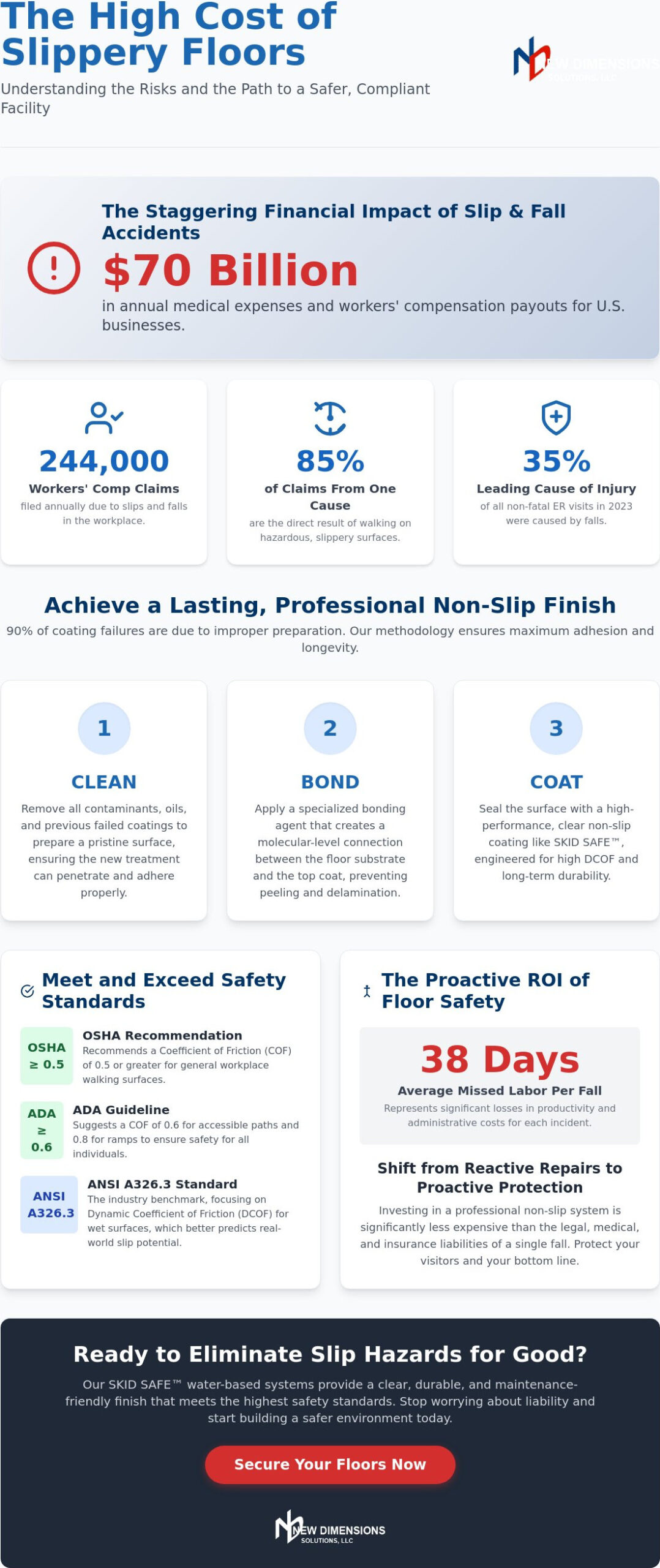
Current data reveals a sobering reality for property owners. In the United States, slip and fall accidents result in approximately $70 billion in medical expenses and workers’ compensation payouts every year. For businesses, this translates to roughly 244,000 workers’ compensation claims annually. Perhaps most telling is that 85% of these fall-related claims are the direct result of hazardous surfaces. These aren’t just numbers; they represent lost productivity, legal battles, and significant physical trauma. Falls accounted for about 35% of all non-fatal emergency room visits in 2023, making them the leading cause of injury in the country.
Property owners have a legal “duty of care” to maintain safe environments for employees and visitors. While some rely on temporary “quick fixes” like rubber mats or adhesive strips, these often peel, curl, or create new trip hazards. A permanent non slip floor coating offers a proactive defense against negligence claims. It demonstrates a commitment to high standards that temporary measures simply cannot match, moving your facility from a state of reactive repair to one of proactive protection.
Understanding Slip and Fall Liability
Insurance companies prioritize risk mitigation above almost everything else. High safety scores and documented slip-resistance testing often lead to more favorable premiums, while a history of accidents can make coverage prohibitively expensive. Compliance with OSHA and ADA standards is non-negotiable for commercial facilities. OSHA recommends a COF of 0.5, while the ADA suggests 0.6 for level surfaces to ensure accessibility. To maintain these standards over time, facility managers must focus on Sustainable Slip Resistance, which ensures the floor remains safe throughout its operational life. A “Wet Floor” sign is merely a warning of a temporary hazard; it’s never a substitute for a compliant, slip-resistant surface.
The Financial ROI of Professional Floor Safety
The economic logic for professional safety is clear. The average person who slips and falls at work misses 38 days of labor, which is a significant loss in productivity and administrative cost. When you compare the potential expense of a single litigation case or a massive workers’ comp payout to the investment in a high-quality sealer like SKID SAFE™, the financial choice becomes obvious. Long-term savings also manifest in reduced floor wear and simplified cleaning protocols that don’t require aggressive chemicals to maintain grip.
Safety ROI is the measurable financial gain achieved when the cost of preventing an accident through superior surface preparation is significantly lower than the legal and medical liabilities of a single fall.
How Anti-Slip Technology Works: Bonding vs. Surface Grit
True safety relies on the science of friction. To understand how a non slip floor coating functions, you must first distinguish between Static and Dynamic Coefficient of Friction (DCOF). Static friction measures the resistance required to start a slide, whereas DCOF measures the resistance while a person is already in motion. Industry standards like ANSI A326.3 focus heavily on DCOF because it more accurately reflects real-world slip hazards on wet surfaces. High-performance coatings don’t just sit on top of the floor; they create a predictable, consistent grip that remains effective even under heavy foot traffic.
The “peeling problem” often seen in low-quality coatings usually stems from poor resin flexibility or trapped moisture. When a coating is too brittle, it cannot handle the natural expansion and contraction of the substrate. This leads to delamination, where the sealer flakes off in large patches. Professional-grade systems prioritize a molecular bond with the surface, ensuring the finish stays intact for years rather than months. When evaluating different types of anti-slip coatings, the chemical composition of the base sealer determines whether the safety solution is a temporary fix or a long-term investment.
Water-Based vs. Solvent-Based Sealers
Water-based systems have become the preferred choice for modern facilities. Unlike traditional solvent-based or epoxy coatings, water-based sealers like SKID SAFE™ are low-odor, non-flammable, and eco-friendly. They comply with strict 2026 EPA and California VOC regulations, making them safe to apply in occupied buildings without the risk of toxic fumes. Additionally, water-based formulas provide superior clarity. They don’t yellow over time, which is essential if you want to maintain the aesthetic of decorative tiles, polished stone, or stamped concrete while adding a non slip floor coating.
The Role of Traction Aggregates
A sealer provides the bond, but the aggregate provides the bite. Traction additives like ND AGGREGATE™ are engineered to be suspended within the sealer rather than just sprinkled on top. This is a critical distinction. If the grit is not evenly suspended, the floor develops “bald spots” that are deceptively slippery. Different grit sizes allow for customization based on the environment. A commercial kitchen might require a more aggressive texture, while a residential bathroom needs a finer, more comfortable feel underfoot. Because ND AGGREGATE™ is specifically designed for compatibility with SKID SAFE™, it won’t settle at the bottom of the pail during application. This ensures a uniform safety profile across every square inch of your floor. You can explore these professional-grade safety systems to see how specific aggregate blends can be tailored to your facility’s unique traffic patterns.
Evaluating Non Slip Solutions: Durability, Warranty, and Performance
Selecting a safety measure for your facility requires looking beyond the initial application. While many products claim to provide traction, their long-term performance varies wildly. You need a solution that stands up to heavy foot traffic, environmental exposure, and rigorous cleaning schedules. A permanent non slip floor coating becomes a structural part of your floor, offering a level of reliability that temporary alternatives simply cannot match.
Consider the lifespan of common “quick fixes.” Anti-slip tapes and adhesive strips often fail within months. The edges curl, the adhesive breaks down under moisture, and they eventually become trip hazards themselves. In contrast, a professional-grade liquid coating is designed for longevity. When evaluating these products, a five-year warranty is the industry gold standard. It signals that the manufacturer has conducted extensive testing on bonding strength and abrasion resistance. This level of protection is often tied to “Made in the USA” quality control, where chemical manufacturing follows strict consistency standards to ensure every batch performs as expected.
Why Acid Etching is Often a Mistake
Acid etching is a common but frequently regrettable choice for increasing slip resistance. This process uses corrosive chemicals to create microscopic pits in the surface of ceramic tile or stone. While it does increase friction, it permanently damages the floor’s structural integrity. These microscopic holes act as magnets for dirt, grease, and bacteria. In hygiene-sensitive areas like commercial kitchens or healthcare facilities, etched floors become nearly impossible to sanitize. Because the damage is irreversible, you’re often left with a floor that looks perpetually dingy. A high-quality non slip floor coating is the preferred choice because it adds protection without destroying the underlying material.
Performance Metrics: What to Look For
When you’re comparing safety systems, look for specific performance indicators that guarantee a return on your investment. UV resistance is critical for outdoor pool decks or sun-drenched entryways; without it, many coatings will turn an unsightly yellow within a year. You also need a finish that resists harsh cleaning agents. Industrial floors face constant exposure to degreasers and disinfectants that can soften or lift inferior resins. Finally, consider the ease of future maintenance. Superior systems allow for periodic re-coating without the need for labor-intensive stripping of the original layer. This saves significant time and money over the life of the floor, ensuring your safety standards never slip due to maintenance hurdles.
The 3-Step System for a Professional Non-Slip Finish
Why do so many safety projects fail within the first six months? Industry data suggests that 90% of coating failures are directly attributable to poor surface preparation. Simply rolling a product onto a dirty or improperly treated floor is a recipe for delamination. To achieve a long-lasting, high-performance non slip floor coating, you must follow a methodical “Clean, Bond, Coat” methodology. This system ensures that the sealer doesn’t just sit on the surface but becomes an integral part of the floor structure.
Success starts with understanding your environment. You should only apply these systems when temperatures are between 50°F and 90°F and humidity is below 85%. Attempting an application in extreme conditions will compromise the chemical cure, leading to a cloudy finish or reduced durability. By following a disciplined approach, you can transform a hazardous surface into a compliant, secure environment.
Step 1: Deep Cleaning and Degreasing
You can’t bond to what you haven’t cleaned. Standard household cleaners often leave behind a soapy film that actually prevents adhesion. Before applying any sealer, you must remove all wax, grease, and factory-applied “transit” sealers that often coat new tiles. Using a professional-grade solution like SUPER BOND & CLEAN™ is essential. It’s formulated to strip away deep-seated contaminants while ensuring the floor reaches a neutral pH. A neutral surface is critical; if the floor is too acidic or alkaline, the chemical bond of your non slip floor coating will likely fail.
Step 2: Molecular Bonding
Once the floor is surgically clean, you must create a bridge between the substrate and the final finish. This is where many DIY kits fall short. After cleaning, perform a simple water beading test. If water beads up, contaminants are still present. If it soaks in evenly, you’re ready for the bonding agent. Mechanical bonding is superior to simple adhesion because it creates a physical interlocking network within the substrate’s pores, ensuring the finish remains resilient under heavy mechanical stress. This step effectively “primes” the surface, allowing the sealer to anchor itself deeply into the material.
Step 3: Precision Coating Application
The final step involves applying the SKID SAFE™ sealer in thin, even layers. Avoid the temptation to apply one thick coat to save time. Thick applications trap moisture and lead to a soft, vulnerable finish. Instead, use a high-quality 3/8-inch nap roller or a professional sprayer to apply multiple thin coats. This builds a durable, layered defense. You must manage foot traffic carefully during the curing phase; while the floor may feel dry to the touch quickly, it requires a full cure to reach its maximum hardness. To ensure you have all the necessary components for a successful application, you can order a complete professional prep and coating kit tailored to your specific square footage.
SKID SAFE™: The Industry Standard for Floor Safety
Since 1986, the SKID SAFE™ system has served as a benchmark for high-performance surface protection. This proprietary water-based formula was developed to solve the exact problems discussed throughout this guide: peeling, yellowing, and inadequate friction. By choosing a system with nearly four decades of proven performance, you’re investing in a legacy of American manufacturing and safety innovation. It isn’t just a non slip floor coating; it’s a comprehensive risk mitigation tool designed for the most demanding environments. Whether you’re treating polished marble or industrial concrete, this system provides a predictable, resilient finish that stands the test of time.
The versatility of the SKID SAFE™ system is one of its greatest strengths. It bonds effectively to a wide range of substrates, including ceramic tile, concrete, wood, and even metal. This cross-material compatibility allows facility managers to maintain a consistent safety standard across an entire property without switching between multiple, incompatible products. Because the formula is engineered for stability, it maintains its integrity under heavy mechanical stress and environmental exposure. You don’t have to choose between aesthetics and utility; you can have both.
Key Features of the SKID SAFE™ System
A primary concern for many property owners is how a safety treatment will alter the floor’s appearance. SKID SAFE™ provides a crystal clear finish that preserves the natural beauty and color of your underlying material. It doesn’t have the “milky” or amber hue often associated with lower-quality resins. This clarity is matched by exceptional durability, which we back with a five-year warranty. This assurance reflects our confidence in the product’s resistance to abrasion and chemical exposure. Additionally, the system is non-toxic and low-VOC. It meets the strictest environmental regulations, making it perfectly safe for use in hospitals, schools, and private homes where air quality is a top priority.
Where to Use SKID SAFE™
The applications for a professional non slip floor coating are virtually limitless. In commercial settings, it’s the ideal choice for high-traffic lobbies, grease-prone restaurant kitchens, and expansive warehouses where forklift traction is vital. Residential users find it equally effective for securing bathrooms, sun-drenched pool decks, and busy garages. Beyond simple slip resistance, the system offers specialized benefits, such as acting as a base for graffiti protection or simplifying long-term surface maintenance. By sealing the pores of the substrate, it prevents stains from penetrating deeply, ensuring your floors stay cleaner for longer periods.
Don’t wait for an accident to occur before you address your facility’s safety needs. Taking a proactive approach today can save you from the immense legal and financial burdens of tomorrow. You can protect your property with the SKID SAFE™ system today and experience the peace of mind that comes with industry-leading floor protection.
Securing Your Surfaces for the Long Term
Maintaining a safe environment is an ongoing commitment to your visitors and your bottom line. You’ve seen how the right non slip floor coating acts as a permanent shield against liability and injury. By following the “Clean, Bond, Coat” methodology, you ensure that your safety measures don’t just sit on the surface but become a durable part of your infrastructure. This systematic approach eliminates the guesswork and provides a reliable foundation for everyday operations.
Choosing a solution made in the USA with a proven track record since 1986 gives you the confidence that your floors will remain compliant and attractive for years to come. Our industry-leading five-year warranty stands as a testament to the resilience of our formulas. You don’t have to settle for peeling tapes or damaging acid etches when professional-grade protection is within reach. Take the proactive step to eliminate hazards before they become costly accidents.
Order the SKID SAFE™ Anti-Slip System directly from the manufacturer
Your property deserves the highest standard of protection. We’re ready to help you create a safer, more secure environment today.
Frequently Asked Questions
Will a non-slip coating change the appearance of my tile floors?
A professional non slip floor coating like SKID SAFE™ is designed to be crystal clear and won’t significantly alter the appearance of your tile. It enhances the natural color of the substrate without the amber tint common in solvent-based products. Because it preserves the aesthetic while adding vital safety, it’s the preferred choice for decorative stone and high-end ceramics where visual integrity is just as important as slip resistance.
How long does a non-slip floor coating last before it needs to be reapplied?
A high-quality non slip floor coating typically lasts between 10 and 20 years when properly applied and maintained. While DIY kits often fail within two to five years, our system is engineered for industrial-grade durability and is backed by a five-year warranty. The actual lifespan depends on the volume of foot traffic and the rigor of your cleaning protocols, but it remains a permanent safety solution for most facilities.
Can I apply SKID SAFE™ over an existing floor sealer?
You shouldn’t apply SKID SAFE™ directly over existing sealers or waxes. To ensure a proper molecular bond, the surface must be stripped of all previous treatments using a solution like SUPER BOND & CLEAN™. Bonding to an old sealer is the primary cause of delamination, as the new coating can only be as strong as the layer beneath it. Starting with a clean, bare substrate is essential for long-term adhesion.
Is the coating difficult to clean once the traction aggregate is added?
Floors treated with our system remain easy to maintain because the ND AGGREGATE™ is suspended within the sealer rather than sprinkled on top. This creates a textured surface that provides grip without the deep, jagged crevices found in acid-etched floors or coarse sand finishes. Standard mopping and automatic scrubbers effectively remove surface contaminants without the need for specialized equipment or aggressive scrubbing chemicals.
How soon can I walk on the floor after applying the coating?
Light foot traffic is generally permissible within 2 to 4 hours after the final coat has dried to the touch. However, the coating requires a full 24 hours to achieve a preliminary cure and several days to reach maximum chemical resistance. We recommend keeping heavy machinery and intense cleaning off the surface for at least 48 to 72 hours to ensure the bond is fully stabilized and hardened against mechanical stress.
Does a non-slip coating work on outdoor concrete and pool decks?
Yes, this coating is specifically engineered for outdoor environments like concrete walkways and pool decks. The water-based formula is highly resistant to UV yellowing and can withstand the expansion and contraction caused by temperature fluctuations. It provides a consistent Dynamic Coefficient of Friction (DCOF) even when the surface is saturated with water, making it an ideal choice for rain-prone entryways and splash zones.
Is the coating safe for use in food preparation areas or hospitals?
Our water-based formulas are non-toxic, low-VOC, and completely safe for use in hospitals and food preparation areas. They meet strict 2026 EPA standards for indoor air quality, meaning they can be applied in occupied buildings without the risk of hazardous fumes. The seamless finish also prevents the growth of bacteria and mold, which is a critical requirement for maintaining hygiene standards in commercial kitchens and medical labs.
What is the difference between a sealer and a treatment for slippery floors?
A sealer like SKID SAFE™ adds a protective, slip-resistant layer on top of the floor, whereas a treatment like acid etching permanently alters the floor’s physical structure. Sealers protect the substrate from wear and stains while providing consistent grip. Treatments often damage the floor by creating microscopic holes that trap dirt and weaken the material, making coatings the more sustainable and hygienic choice for long-term facility management.